
Want the whole job, start to finish?
For years the answer was every 3,000 miles. Most cars today can go much longer than that, but the right number depends on your car, your oil, and how you drive. Here’s how to find yours.
The Quick Answer
Follow your owner’s manual. Most newer cars fall somewhere between 5,000 and 7,500 miles, and many that use full synthetic oil can go 10,000 miles or more.
Don’t Forget the Calendar
Oil breaks down with time, not just miles. If you don’t drive much, change it as often as your manual says in months, usually every 6 to 12, even if you haven’t reached the mileage.
Go by the Oil Life Monitor
Many newer cars track oil life and show a percentage or a reminder on the dash. It adjusts for how you actually drive, so go by it rather than a generic sticker on the windshield. Reset it after every oil change.
When to Change It Sooner
Most manuals list a severe-service schedule with shorter intervals. It applies if you often:
- Make short trips of under about five miles
- Sit in stop-and-go traffic
- Tow a trailer or haul heavy loads
- Drive in extreme heat, cold, or dust
Plenty of everyday driving fits that list, so check which schedule matches yours.
Check the Level Between Changes
Once a month, park on level ground, turn the engine off, and wait a few minutes for the oil to settle. Pull the dipstick, wipe it clean, push it all the way back in, and pull it out again. The oil should sit between the two marks. If it’s low, top it up with the oil type your manual lists. Some newer cars have no dipstick and show the oil level on the dash instead.
Keep a Record
Write down the date and mileage at every change. It keeps you on schedule and backs you up if you ever need to make a warranty claim.
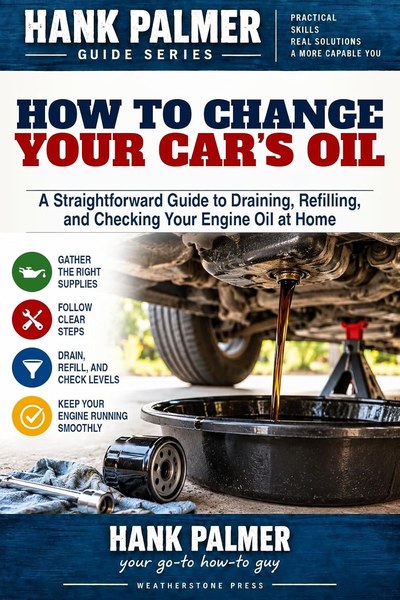
My guide walks you through changing your car’s oil, step by step.
Get the full guide: How to Change Your Car’s Oil by Hank Palmer, on Amazon



Leave a Reply